Inflation Era: Borrow Fixed, Invest Cash
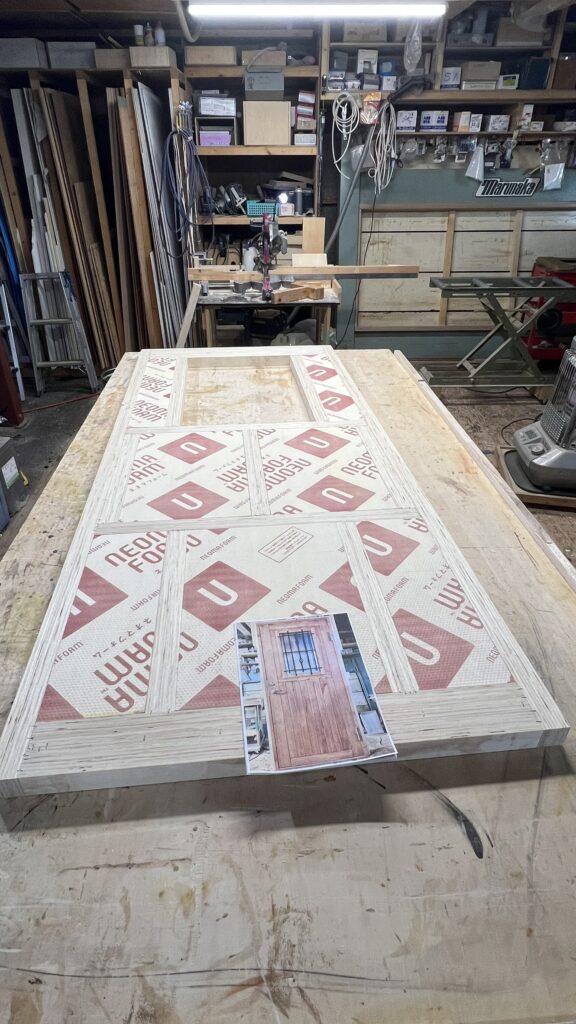
I’m making a front door for a “celebrity-level” home.
This is the point where I built the frame and snugly fitted the insulation inside.
Firmly glue plywood to both sides, then cut out the section that will become the window.
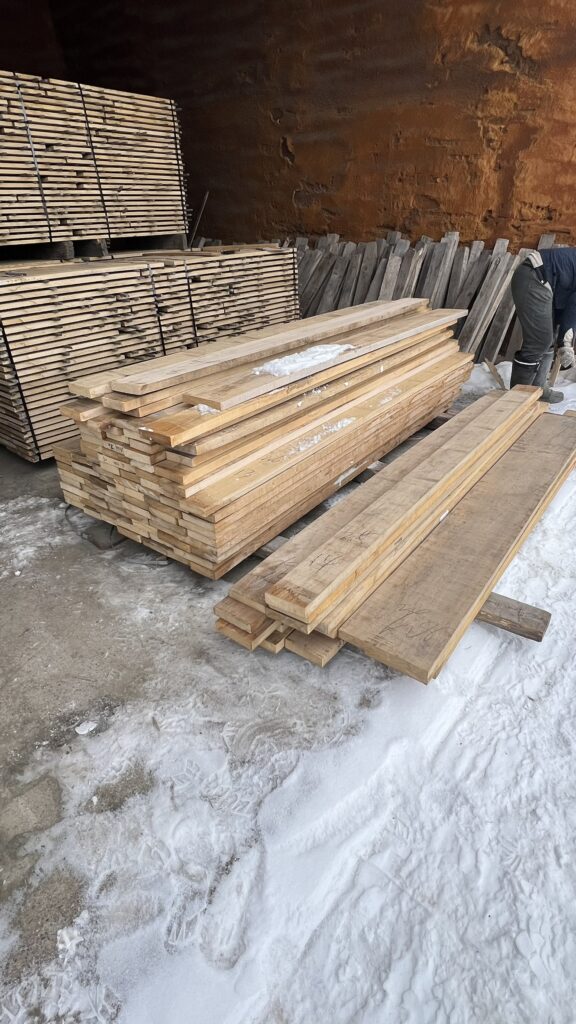
Next, I was going to laminate the finish boards onto the surface, but the wood still felt a bit under-dried, so I stopped.
With this kind of thing, even if the moisture meter gives you “good numbers,” it’s not always enough to judge—there are parts you simply can’t know until you actually start machining it.
So I decided to keep the boards I planned to use in storage and went out to source new stock.
This time it should be fine… probably.
By now, everyone understands we’re already in an inflation era.
If you’re buying a 30-million-yen home today and you have 5 million yen in cash,
and if I were 30 and buying right now, I’d leave that 5 million untouched, take a full 30-million-yen mortgage, and put the 5 million into some kind of investment.
If you can earn even a modest 2% return, the mortgage interest is effectively offset.
At 2% compound interest, 5 million becomes 6 million in 10 years. You’d normally pay about 20% tax on the 1 million gain, but with a couple’s NISA allowance, the tax can be zero.
With a fixed-rate mortgage at 2% over 35 years, the monthly payment on 30 million yen is about 100,000 yen.
But in 10 years, wages are likely to be higher due to labor shortages and inflation—so that 100,000-yen payment may feel like 50,000 yen does today.
In an inflation era, the “smart” move might be to borrow at a fixed rate…
I don’t necessarily dislike the idea that “debt is evil,” but that’s for people who can actually afford to buy that way.
If you can’t buy without a loan and still insist on that line, what do you think your future looks like…?
So then—what should you invest in…?
The same phenomenon is happening in the investment world. Even major index funds like the S&P 500—often considered “conservative”—are, in reality, heavily dependent on the market caps of a handful of mega tech companies.
While they call it “diversified index investing,” when you open the lid it’s basically just “concentrated investing in mega tech.”
I have serious doubts about how long this distorted structure can last over a long time horizon.
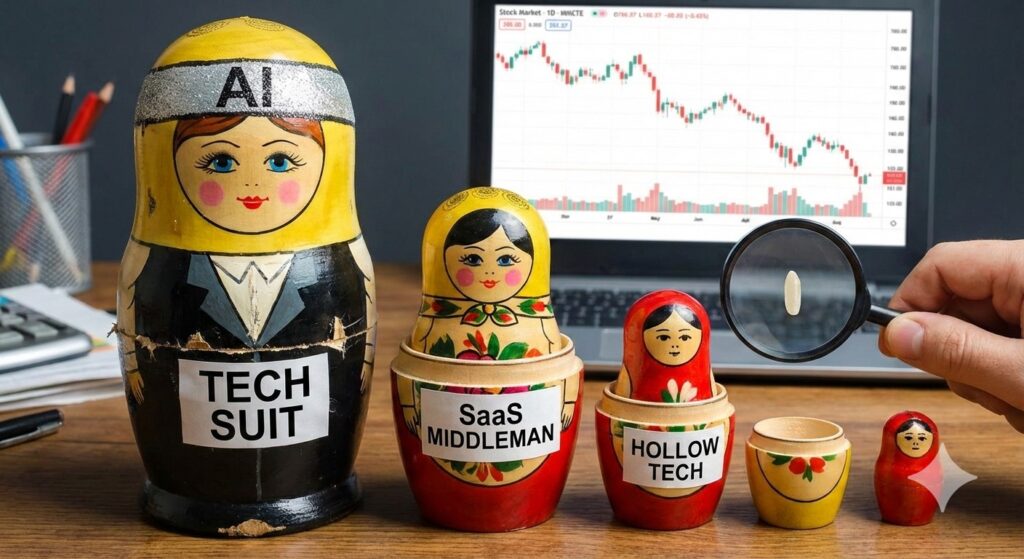
And now, SaaS features are rapidly becoming commoditized. As a result, more and more companies are simply putting a cheap “AI headband from Don Quijote” on top of their tech costume and calling it innovation.
Peel away the layers of this “middleman matryoshka,” and the final core is nothing but a grain of rice—there are plenty of companies like that.
In the end, it doesn’t matter whether it’s miso, cookware, or even housing. Companies that get their hands dirty, make real things in a gritty way, stay close to people’s everyday lives, and provide something with genuine substance.
I believe that kind of steady, unglamorous work—done for years in the places closest to us—ends up being the most reliable and strongest, especially in a world overflowing with hollow businesses.